Showing posts with label marriage. Show all posts

Friday, April 4, 2014

Marriage Doesn't Have to Be Hard

By Brittany Makely
Guest Contributor

Everyone who is engaged or married has heard the warning – Be prepared. Marriage is hard. Maybe that’s true, but can someone please tell me what stage of life or life-altering decision does not include a challenge? It seems like too many people (intentionally or not) paint a picture of marriage as a toilsome, yet worthwhile, endeavor. Let’s be honest, being single is often at least as toilsome as being married. Staying in school and graduating takes roughly 18 years of focused, often-hard work. Succeeding in the professional world requires dedicated effort.

I’m not necessarily saying that marriage is or should be easy. What I am saying is that I think the seemingly inevitable “Oh, marriage takes a lot of hard work” from all the aunts at your bridal shower, coupled with those knowing nods and glances sends the wrong message. On some level, the fact that our society continues to proliferate this line about marriage contributes to a cheapening of the permanence of the institution. Part of what got us to a point in our nation where no-fault divorces are as common and accepted as corner coffeeshops is the mindset that says, “Well, it’s really hard, so you really can’t fault them for trying and failing.” WHAT?! No parent tells their 5th grader that because fractions are hard, they can just quit taking math. The roundtable response when a niece announces a promotion at work during Thanksgiving dinner is not “Wow, that is going to be a lot of hard work.” It seems like marriage has become one of the only “difficult” things in life that we as a society have decided to let use that difficulty as a partial excuse for quitting.

Friday, March 28, 2014

#7QT: Vocational Reading

By Brittany Makely

{one}

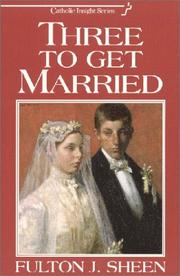
A little over four years ago, I began a new vocation – wife. Almost three years ago, the vocation of motherhood got added. In preparation for our wedding, my husband and I each chose one book to read on love and/or marriage. I chose Archbishop Fulton Sheen’s Three to Get Married. Best decision ever. I so appreciated Sheen’s gentle but firm exploration of the purpose of marriage and both the beauty and trial most spouses experience sometime between “I do” and “til death do us part.”

Three to Get Married was one of several books that have provided indispensable advice, clarity, and encouragement to me as I navigate the most important callings of my life to serve and love my husband and children. Here are six other equally impactful books that I highly recommend to all spouses and parents. Most of these are not written specifically on the subject of vocations or directed toward spouses or parents, but their essence is.

Monday, March 24, 2014

Marriage is hard, but don't panic

By Mary C. Tillotson
Blessing of the Young Couple Before Marriage
by Pascal Dagnan Bouveret, 1880
Public Domain

After complaining about all the “marriage is hard” reminders I got during my engagement and rounding up two other married women to write notes of encouragement to young, frightened brides, I found myself typing an email to a college friend of mine, telling her that marriage is, of all things, hard. Perhaps I ought to forgive the older wives. Perhaps, like I was, they were trying to be helpful.

Most young brides are naive and doe-eyed about marriage, and I think we should let them begin their marriage doe-eyed and trusting! Marriage is a risk, and new wives will learn soon enough that love this deep carries the potential to be hurt this deeply. Don’t lecture them with horror stories or pass on your jaded view of marriage. It’s wrong to needlessly undermine their ability to love and trust their new husbands.

In college, worried about my ability to be a decent mother someday, I asked a mother of six to teach me how to change a diaper. While we were chatting over her wiggly six-month-old, she told me that no matter how prepared you are for motherhood, 90 percent of it you make up on the spot. I think the same is true of marriage. At least so far, mine’s been like that.

It’s impossible to describe to a new bride what marriage really entails, because some things can only be learned through experience. Even if it were possible to communicate to the new bride exactly how it feels to confront one’s own pettiness (and that of one’s spouse) in the inevitable argument over how to fold towels, what would that accomplish? She will still have that argument. And she will have it with her husband, not anyone else’s; she will bring her personality and experience to the table, not anyone else’s. She and her new husband need to learn how to make their relationship work, not anyone else’s.

I think young brides do need to hear that marriage is hard, but not from jaded or micromanaging wives. Marriage is hard sometimes, and it’s startling, at least at first, and it’s comforting to know that there’s no need to panic. Here is what I started writing to my friend:

Marriage is going to be difficult in ways you can’t imagine right now. It’s going to test you and try you and stretch you and call you to a kind of love that doesn’t even make sense to you, at least right away. You’re going to become painfully aware of your own immaturity and pettiness, and of your husband’s. You will find yourself failing over and over, and him, too; you will be tempted to despair and wonder if you made the right decision.

But don’t dwell on that right now. Right now, be joyful; plan your wedding and look forward to many long, happy years together. If you both work together and cooperate with grace, that’s what your marriage will be. Believe in love, because love is real; you have every reason to believe you will have a great marriage.

Tuck away those reminders that marriage is hard. Don’t stress yourself out over it. Soon enough the two of you will hit a bump in the road, and you’ll be surprised that marriage could be like this. Think back on what you heard, and take courage: this may be the hardest, most painful thing you’ve been dealt up until now, but many other women – many other marriages – have dealt with this kind of thing before. It is normal. Work through it and you will find a kind of love and joy and peace that you can’t imagine right now.

What do you think? Married women, what advice do you think would be helpful for young brides? Engaged women, what kind of encouragement could you use?


Wednesday, March 19, 2014

Not All Men Are Creepers

The Rest on the Flight to Egypt by Gerard David, 1510.
By Mary C. Tillotson

Today, in the Catholic Church, we celebrate the feast of St. Joseph, one of the more important feasts on our calendar. We honor St. Joseph as the spouse of Mary and foster father of Jesus; as such, he’s a model for husbands and fathers everywhere. He’s a patron of families and workers and all sorts of other things.

This is one of my favorite paintings of St. Joseph. The Holy Family is on its way to Egypt, and St. Joseph is in the background, cutting firewood or harvesting food – doing what he can to make things a little more comfortable for Mary and baby Jesus.

St. Joseph is a good reminder that not all men are creepers – something even virtue-minded people too easily forget.

Remember those modesty debates we used to get into, especially in college when we didn’t have anything more important to talk about? My women friends and I would trek back to our dorms afterward and wonder the same thing aloud: do men exist who aren’t creepy and gross? Here are all these church-going, door-opening, chivalry-endorsing young men who claim they are involuntarily fixated on our private parts unless we’re wearing long skirts and turtlenecks, or whatever their particular standard was (it varied). Let’s all find a convent – quick.

Monday, February 24, 2014

“How Does She Do It?” Facing the Fear of Family Life

By Mary Stanford
Guest Contributor


I don’t ever remember a time when I didn’t want marriage and family. I remember being teased about being “boy crazy” in 3rd grade. Yes, third grade. (The really embarrassing thing is that I remember being annoyed in kindergarten that marriage seemed like such a long wait.) So, you might say that fear was never really an issue for me. On top of that, I came from a happy home, filled with lots of kids. My parents made the whole deal seem easy. I was ready and had no fear.

Flash forward to the year 2000, when my time finally came. A bit later than expected, as I was already 25 and beginning to wonder if I might not rot on the vine. Once again, no fear—so happy was I to have found a person so suited to me—and so willing to fulfill my dream of being married and having babies. So excited to enter into marital bliss that I didn’t even panic that he hadn’t secured a job yet. A charming graduate student with a bright future; that was enough for me.

The first glimmer of fear that I remember experiencing was when I held our first baby in my arms the following spring. It was the first time in my life I had ever contemplated the thought that one baby might just be “enough” for me. I was prepared for the pain of delivery, for the surrender of so many little freedoms that accompany motherhood, but I was not prepared for the “worry.” I had been caring for babies since I was a kid— how could this be any different? Oh but it was. Nothing can prepare you for the sickening, never-ending worry that settles in your soul the moment your own child enters the world. Not some baby you can hand back to its mother—no, the one that comes home to stay is the one that changes everything. I had always thought that it would be such a shame if I were only blessed with one child; suddenly it seemed that my fears for this child consumed me. How does anyone handle more than this?

Well, I learned, gradually, that that initial fear was never totally going to subside. It would instead, like some sort of baggage, be something that I would carry along with me. I would walk with it, and gradually come to accept it. As I tried to wrap my head around this feeling, I became aware of one other aspect of family for which I was not entirely prepared: the love. I loved that little girl so much that I felt guilty. I felt unfaithful to the young siblings that I had once adored—and still do adore, of course-- but with a sister’s heart, not a mother’s heart. I felt guilty even contemplating another baby—when this one seemed to demand and deserve everything that I had. I used to watch her start to wake up from her nap and pick her up before she even cried. It just seemed right. I didn’t complain, I didn’t count the cost. She was worth it.

Then I would see other families at church—big families-- and wonder how they did it. How did they attend to everyone? How on earth did many of them home school? How did they survive? Fear would begin to bubble to the surface again.

Flash forward 13 years. Somehow, some way, I’m “doing” it. Perfectly? Oh dear no. (Is there such a thing?) No, but happily, and surprisingly sanely. Most days. Suddenly all tables have turned and I have young wives and mothers asking me how I do it. The truth is, I don’t know, and if I tried to concoct some answer it would most certainly come back to haunt me. What I will share is that, with five more babies, and 8 years of homeschooling under my belt, I have learned that those two overwhelming emotions, love and fear, have tended to balance one another out.

The love that almost takes your breath away is what keeps you invested. No one can understand how Mrs. X can deal with her extremely difficult 4 year-old because no one sees him like she does. No one can prepare you for how much you are invested in your own child. No one could convince you what you might be willing to undergo for that child’s sake. The “pride swallowing siege” (thank you, Jerry McGuire) that is parenthood is eminently do-able because you love that kid more than your own self. You’ll do just about everything including cutting off your right arm. That’s why it’s is so sad when people forego having children because they find other people’s kids irritating. They never gave their own kid a chance to win them over. And he always does. Nature is funny that way.

As far as my own life goes, I attribute our ability to thrive as a family to something beyond just the natural. As a Catholic, I believe in a little something we like to call sacramental grace. Read the catechism: besides enriching our souls with the life of sanctifying grace, each sacrament also imparts sacramental grace, a special gift which corresponds to the purpose of any given sacrament. My marriage is a sacrament; it imparts to my husband and to me a special assistance—not a general help, mind you—but a very specific help. It helps us to live out our marriage. It helps him to put up with me, and me to put up with him. And it helps us to deal with all these babies. At those moments when I am tempted to judge another family’s parenting decisions, I have to bite my tongue. No one has the grace to raise those kids except for them. No one has the tailor-made divine aid that accompanies their sacramental marriage except for them. I have my job to do, and they have theirs. And frankly, I find that quite liberating.

So, fear not, my young friends. Okay, I immediately retract that imperative. What I meant to say was: have no fear about being able to handle my life. The fact is: you just might not be able to swing it, but you can handle yours. You will feel the weight of fear, heavy at times, but the pull of your own miraculous love, that bond of affection which gives you the courage to walk through the Valley of Death (or at least a valley of vomit) for your loved ones, will kick in and you will be able to face whatever comes your way.

Mary Stanford earned a B.A. in philosophy from the University of Dallas, and a M.A. in theological studies degree from the Pontifical John Paul II Institute for Studies on Marriage and Family in Washington, D.C., graduating summa cum laude from each institution. She is married, and is the mother of six children, whom she educates at home. A frequent speaker on topics including marriage, contraception, femininity, and the theology of the body, Mary also teaches as an adjunct instructor in the theology department of Christendom College.

Image by Redboxweddings.
Family photo courtesy of the author.

Friday, February 14, 2014

After 30+ years of marriage: "Oh, you'll love being married!"

By Elizabeth Petrides (Mary’s mom)
Guest Contributor

You can do it!

My daughter, married a whole year and a half, tells me that too many young people are afraid of marriage. Perhaps they’re afraid of the challenge, afraid to fail, afraid of not having any fun. And while marriage is a challenge at times, mostly it’s wonderful. And at the end, when you’ve survived money crunches, schedule crunches, toddlers, and teenagers, it’s wonderful.

I still remember when my husband and I had been married for about a month, and my brother and his girlfriend came over for a short visit. They told us that they were going to get married the next summer. The first thing out of my mouth, before I even thought about it, was something like this: “Oh, you’ll love being married. It’s so much fun!” At that point, I realized that I hadn’t really expected to be happy being married. My parents weren’t happy with each other, at least not that I could see, and my in-laws seemed not really well-suited for each other. I had been prepared for all the disappointments, challenges, and sacrifices involved in marriage, but I hadn’t really been prepared for happiness.

Wednesday, February 12, 2014

You can have a great marriage without any superpowers. (Right?)

by Mary C. Tillotson
Marriage is hard, everybody. Really hard.

Luke and I dated for a while, then he proposed and I said yes and we were engaged. We glowed for a few days, and then the bad news started coming in droves.

"Marriage is hard, you know," I heard. Over and over again.

This one retirement-aged lady from church: "Marriage is really hard. You know, my sister-in-law got married before we did, and she told us the first five years were the hardest. At the end of five years, I called her and said 'At least we're through the hard part!' And she said, 'No, the first 10 years are the hardest.' At the end of 10 years, I called her again and she told me the first 15 years are the hardest. You know, it's really all hard."

Let me describe that conversation in two words: Not encouraging. Or seven: Not what engaged people need to hear.

She was laughing in that way moms laugh about kids throwing up all over everything and ruining your life goals and your priceless, inherited-from-four-generations dishes. If you want to commiserate with people who have already experienced the same thing, go for it, but don't talk to me about it! You're just making me doubt whether this is really a good idea after all.

We turned out okay: for one thing, Luke is the sort of man you don't not marry when he asks, and for another, we had very supportive parents so we could mostly deflect these kinds of comments. But aside from our parents, we mostly heard two messages about marriage:

Friday, January 24, 2014

Mission: Get Our Toddlers Married

by Joy Pullmann

Our three children are all under four years old, but I'm already worried about whether they can find a good spouse. Since I have, I've realized it may be the best thing in life to marry a good man (and I presume the converse is true for men). There are lots of reasons marriage means a good life, not least of which is more and better sex: A longer life, better health, greater long-term happiness, less loneliness, and more.

I want my kids to have what I know will make them absurdly happy. But I'm worried, because I already know quite a few twenty-somethings who would be a great catch but haven't been able to find anyone to marry, and are rather discouraged.

I know I can't control whether my kids find a husband or wife, but there are some practical things I can do to make it more likely. Matthew Cothran makes a brilliant comparison between how American  parents prepare their kids for college versus how we (don't) prepare them for marriage:

Wednesday, December 18, 2013

Fear-free marriage

By Brianna Heldt
Just Showing Up

When my husband and I first began discussing the possibility of further growing our family through international adoption, it was 2005.  Our biological daughter was 15-months-old then, and our life was somehow manageable and flexible enough to consider jumping into the proverbial deep-end of paperwork, social worker visits, and parenting traumatized children.

Going into the process was exciting and hope-filled, but frightening and anxiety-inducing too.  You don’t know what particular challenges lurk silently ahead, nor can you realistically anticipate–as hard as you try, you really, truly can’t–how your family dynamic will change or what the emotional impact will be.

So when we brought our sons to the United States we became parents to three children ages two and under.  Adopting twin boys that were only eight months younger than our daughter was, I suppose, kind of a crazy leap of faith.  But we did it because we had discerned through prayer and discussion and research that it was right for us, and that God was–for whatever reason–calling us to it.  We said yes.

Even in spite of a relatively smooth transition for our sons and daughter, those early months of learning how to do life with three little ones afoot were intense.  There was constant movement, the addressing of countless medical and emotional issues, and mess.  Lots and lots of mess.  Crumbs and laundry and sippy cups and toys and diapers.  My husband and I would collapse on the couch at the end of each day, look over at one another and laugh–laugh!–at how positively tired we were, at how crazy life felt and at how strange we surely looked when we were pushing around a double stroller while also wearing a small child strapped to our chest.

But do you want to know what else we’d talk about in our living room at the end of long, toddler-filled days?  We’d talk about healing.  And progress.  We’d talk about the mystery of love, about how God was miraculously knitting all of our hearts together in a way that transcended biology and personal history.  We’d talk about joy and fulfillment and about how we’d sealed our fate as “that crazy family with all the kids”, which transformed into a public, gasp-worthy spectacle anytime we ventured outside our front door.  We’d talk about our sons’ birth mother, extreme poverty and about how no baby ought to be starving.  We’d recount the really hard things that happened that day–a post-institutionalized little boy, with no muscle tone and a failure-to-thrive diagnosis, having a panicked melt-down upon even the slightest glimpse of food, or my heroic attempts at crossing streets and navigating grocery aisles with three itty bitty kids in tow–and we’d remember the really good things that happened every day, like a sister and her brothers holding sticky, chubby hands, giving hugs, and laughing together.  Wanting to spend every single moment of the day side-by-side.

We were seeing redemption and mercy and the glory of the human family, happening right before our very eyes. 

We would of course go on to have two more biological children in the following years, and then adopt again in 2011, this time two little girls who’d been born with Down syndrome and severe congenital heart defects.  Then we had another baby this past spring.  So we have eight children, and they’re all relatively close in age, and I won’t tell you that our life isn’t messy or busy or occasionally hard.  Because (hello multiple heart surgeries and meal planning and homeschooling) it is.  But I will also tell you that it is GOOD.  It is happy.  It is marked by joy, and ups and downs, like most any life.

And yet I admit that every single time we’ve been given the gift of a child (whether by birth or adoption), I was a little bit afraid.  Afraid that we’d implode, afraid that we’d overextended ourselves beyond repair, afraid that we were certifiably insane–which, you know, maybe we are.  But crazy-town or not, every.single.time. God gave us a sweet little one, do you know what really happened?  Our family was renewed.  Each one of us grew in our capacity to love.  Our family life was strengthened.  Unconditional acceptance abounded.  Our family dynamic changed–for the better.  Sometimes we argue or yell or need a little bit of space, but then, doesn’t everyone?  My children are many, but they are happy.  I am happy.  And we are living proof that you don’t have to be a perfect mother, father or biped of any sort to live a marriage that is open to children.

I suspect that part of why we experience fear in this area is because we sense, on a very deep level, the gravity or weight of having a child–and that is, in many ways, good.  The God-given power of participating in procreation (or the ability to adopt) isn’t something to take lightly or be flippant about.  So in that sense it should be approached with awe, reverence and humility.  But I also think there is the potential for us to miss out on a whole lot of beauty, love and grace when we become crippled by fear, doubt, and the internalized messages of our modern age.  And I’m just as susceptible to that as anyone–I’m generally non-committal and am an imagine-the-worst-case-scenario sort of person.  The fact that I was a 20-year-old bride and am now a mother to eight are all examples of God’s delightful sense of humor.  But what I learned all those years ago, in the exhausting days of having three children ages two-and-under, was that God can do good things with our “yes”, that a marriage can endure and THRIVE in the midst of raising babies, and that large families can flourish in happiness–even in our modern age.  And they are especially needed in our modern age.

So let’s worry less.  Be not afraid.  Families are specially designed for nurturing children and marriage is particularly ordered towards openness to children, either through the miracle of birth or the miracle of adoption.  Shared bedrooms and crowded kitchens and full-to-capacity carloads may no longer represent the typical American family’s landscape, and may indeed necessitate sacrifice and adjustment.  But they also have the special ability to harbor a childhood’s worth of hush-spoken secrets, side-splitting laughter, and shared memories that will last a lifetime.  They potentially shape and form and soften and grow.

Love multiplies, right before your very eyes.

And then one day you and your husband collapse on the couch–years older and hopefully a little bit wiser–and you realize that, in spite of your many children thundering around like elephants in the next room, long past bedtime, playing a game they invented called “stroller tag”?  You really kind of had nothing to fear.

Brianna Heldt is a mother to eight and contributor to Ignitum Today, Catholic Stand, and Catholic Exchange. In addition to her four biological children, she and her husband are also parents to four adopted children from Ethiopia, including two daughters with Down syndrome. When Brianna is not busy blogging or homeschooling, she enjoys spending time with family and friends, reading good books, thrifting, and advocating for orphaned children with medical needs. She lives with her husband and kids in Denver and blogs at Just Showing Up, where this post originally appeared.

Thursday, October 24, 2013

The Mission of Money and the Single-Income Marriage

By Katie Sciba
The Catholic Wife
“Who can find a good wife? She is far more precious than jewels. The heart of her husband trusts in her, and he will have no lack of gain. She does him good, and not harm” (Proverbs 31:10-12a).

Back in August I dug up my old Dave Ramsey CDs for some monetary motivation; and immediately Andrew and I got back on the horse to ride furiously into the sunset of Financial Peace (because frankly, I’m terrified of not having Financial Peace).

We’re a single income family and in the beginning, Andrew and I agreed that I would handle the finances. Though of course he’s privy to our cash flow, it’s my job to make sure the outgo doesn’t exceed the income. Since our financial revival a couple months ago, I’ve made a habit of combing our budget in search of error and excess to ensure that we have complete control over our finances, intentionally placing each penny prudently. Coupons, SALES, switching to reliable-yet-inexpensive Ting for our cell service, coffee at home vs. Fivebucks; every little bit helps and any new approach we find to help us save more and spend less becomes Sciba Family Dogma: we cling to it stubbornly, knowing the discipline will help our family. (In case you think we live like shoeless hermits, I want you to know that we still LIVE, have fun, and purchase things we want.)

Friday night I burst through our front door beaming from a big grocery trip. I giddily reported to Andrew that after coupons and discounts, I managed to save us $16 at the check out, not including the dollars saved from buying only on-sale items. Others might save much more on a regular basis, but I was pretty proud of myself since the whole coupon/smart-shopping idea used to intimidate me.

In my chatty glow, it occurred to me that I waxed so merrily about my savings because I wanted Andrew to know that I was being a good steward of his income – a wife who doesn’t take advantage, but has learned to deeply appreciate his work and reaping.

*LIGHTNING!*

A sudden, simple, spiritual/financial/revival AHA! struck me at that very moment: It is Andrew’s task as the breadwinner to provide financially for our family; it is my corresponding duty to reveal to him, through good stewardship of his income, that what he brings in is enough. Generally speaking, men want to provide; it’s a natural charism that when under fire, can cause self-doubt and anxiety. If it seems like there’s not enough cash, then it’s easy (and common) for a provider to doubt his worth because if he’s doing his best, working hard, and coming up short, discouragement follows; BUT, I can stave off that discouragement by being a good steward of our finances, by living simply, making prudent financial choices and communicating about expenses and needs. And the plus is that I can build Andrew up in good, honest confidence because he’ll trust that I treasure him as well as his work for me and our boys.

I want so so so much to be the Proverbs 31 type for my husband. And why not? I’m crazy about him! With our combined duties of providing and stewardship, we feel safe with each other and hopeful in our relational security. The whole thing is a team-building effort that applies not just to single-income marriages or he works/she’s at home situations; the point is that putting a little financial prudence into practice has a way of letting your provider know you appreciate what he does.

Image by Finance Fox.

Originally from Newport News, Virginia and grown in the burbs of Omaha, Nebraska, Katie Sciba is a housewife and mother, award-winning columnist for the Catholic Connection, and editor for the blog Truth & Charity.  She won a third-place award from Catholic Press Association for Best Regular Column on Family Life in 2013, and her blog has been featured on National Catholic Register, New Advent, Spirit Daily, and Big Pulpit. A 2008 Benedictine College grad, she lives with her husband, Andrew, and three sons. She admires St. Elizabeth of Hungary, who was renowned not only by her compassion for the poor, but also by her deep love for her husband. She blogs at The Catholic Wife, where this post originally appeared.

Sunday, October 20, 2013

We're Not Confused, We're Married

My husband and I have sort of a strange relationship. I happen to earn our main income and produce all the babies, but he's not one of those lazy-a** husbands who make their wives do all the big jobs while they sit on the couch watching porn or Simpsons reruns. I'm also not the career woman who spends 80 hours a week in the office while her kids languish with a nanny. We're both sort of a weird mixture of the other, unlike both the traditional and sensible husband-wife relationship where the man is the hunter-gatherer and the woman the homemaker, and the modern relationship where everyone works while outsourcing the kids to strangers.

My husband is not androgynous or effeminate. He's spent the past two weeks jackhammering and digging out our hideous concrete patio to make way for what I hope will be a nice new brick one. He handles all the home repairs, car maintenance, and financial matters (thank goodness). I'm also not very manly. I'm not the Cinderalla-Barbie-princess sort of girl, but I crochet, and bake bread, and squee at mice. He's also more stern with the children, and I'm a mushball. 

But my husband also does almost all of our grocery shopping and meal creation. I used to, but I got busy and tired being pregnant all the time, so he took it over.

Thursday, September 26, 2013

How to help in times of grief

By Tammy Ruiz
Guest Contributor

When Mary asked to wrote a post for this blog, we discussed possible topics and one she floated was the awkward aspects of social relationships after death and how to minimize those. As I am currently living that situation, I thought it was ideal.

I work as a nurse caring for women and families after pregnancy loss and infant death. I spend time with each mom talking to her about how to reenter her previous social relationships. While different deaths create different dynamics, it's good for those around us to peek into our worlds. I may write about the bereaved moms I care about in another post but I want to share something from personal experience today.

I am a 48-year-old Catholic mom and nurse. One year and a few weeks ago I had a bustling house with seven people in it ... I got up on a Saturday morning ready to run to the store to get my husband some soda - he hadn't felt well the night before (he thought he had the flu) and opted to sleep in the theater room lest he get anyone else sick. I went to check on him only to find him dead on the floor. He was young and seemingly very healthy...he was a recently retired Marine Officer who had run marathons - his death was a huge shock.
Tammy Ruiz at her husband's funeral


Because of my work, death was not totally foreign to me, but (of course) nothing prepares you for a life change this profound. In the immediate aftermath of his death, I was so touched by the outpouring of kindness...but even when experiencing it myself, I considered "What parts of this are helpful, what am I really looking for from people?" because I wanted to be able to share what I learned at some point. One day - in the midst of card /flower/fruit basket madness - I realized that as much as I really appreciated each kind gesture, my most primitive need was to know that 1) people had heard the news and 2) it was important to them.

Yes, when the rubber really met the road, I just really wanted to know that my loss was important - whether people expressed themselves grandly or simply, I really did want to hear from them. Even though I would have liked to talk to everyone on the phone, I certainly didn't have time or emotional energy for it, so receiving a combination of cards and calls was ideal. I hardly read the preprinted text of cards, I just wanted to see who wrote it and if they added anything...it could have been a Congratulations on your Bar Mitzvah card for all I knew (one goofy friend did send one of those and it made me laugh). I found it most comforting when people told me that I had been on their mind ever since they heard the news. It was very encouraging to know I hadn't been forgotten.

One last comment about gestures of kindness...in tough economic times, many people have significant financial challenges and there is no shame in it. Please don't feel obligated to do more than you can afford. I received a few gestures that were so sacrificial they were like the widow's pence...while they warmed my heart, they also broke it as I was very concerned that my friends would suffer from it. Your prayers and words of kindness will be treasured by those who really care about you - please don't spend your Cheerios money on flowers.

There were a few people who I considered myself "close" with who I never heard a word from. The understanding gracious side of me realizes that they may have been afraid or uncertain, but my needy hurting side said "we were friends for 30 years and you couldn't reach out at all? really?" The worst for me was a friend who said NOTHING to me then sent a form letter solicitation asking for funds for a missionary trip. I resisted the urge to tell her exactly what I thought about that; in my state of mind, it wouldn't have been tactful.

Rebuilding came in different stages from "Immediate Crisis" to "Dust Settling Over Chaos" to "Calmer Transition" to "Remaking my Life"; waves of grief sent me back to crisis for short spurts, but mostly I moved forward. In the last few months, I have noticed a trend that I want to share.

Being an integrated person is one of my goals, not compartmentalizing different parts of my life into boxes. I am right now STILL a bereaved widow but ALSO a young(ish sort of) person newly single who has a new relationship. I met my husband when I was a teen and we were grandparents when he died - he will ALWAYS be a part of my life...his death will ALWAYS be profound to me. If I waited until those things were no longer factors to fully create a new life for myself, I would wait forever and I have decided not to do that.

I get an overwhelming sense from people that they are willing to talk to me about EITHER my old life and grief OR they want to talk to me about my new life, but few people are willing to do both. For me the most painful example of this was at a social gathering where I sat in a group of five, two married couples and me. Awkwardly, they began to share stories of their courtships and marriages and I felt like a big sore thumb...if I want to participate, do I refer to my former marriage or new romance either of which will make them uncomfortable. I went for the 'new romance' and I got a death-stare multiplied by 4. The flip side of that experience was a coworker who dodged behind doors to avoid me after Dave died yet as soon as I started dating she approached me all full of encouragement and congratulations.

I have come to really value the few people who are brave enough to let me really be myself...a person who is just as likely to cry over a memory as I am to gush over a rose from my boyfriend. Maybe to some folks, absorbing the fact that both of these factors are (and will remain for the foreseeable future) real to me seems terribly weird. Yes it is, but let me assure you, when your spouse dies suddenly and young, a LOT of things are weird. To this day I use words that I can still barely believe apply to me even as they flow from my tongue "single mom," "widow," "late-husband," "estate, "girlfriend/boyfriend." (I really need new terms for this...my "boyfriend" is a military Colonel and Special Agent...I feel silly using this to describe him.)

If you have a friend going through this and really want to be there for her (or him), be a person who does not put up the walls I so frequently perceive ...let them be real and whole even when that means you aren't sure what the heck will come out of them next. If you are reading this and it terrifies you because you can't imagine your husband dying suddenly, while I will tell you that yes, it IS horrible, God won't leave you to experience it alone...He will be close in a thousand ways that you can be thankful for (like NOT having told my daughter to "go check on your dad") and He won't leave you to suffer alone.

Tammy Ruiz has been a nurse for 28 years and spent most of her career in Neonatal Intensive Care. For eight years, she has been a Perinatal Bereavement Coordinator - caring for women and families suffering miscarriage, stillbirth, neonatal death and SIDS. Part of her work involves assisting parents in preparing for births when the baby has received the diagnosis of a life limiting condition (often called "Perinatal Hospice"). In addition to her nursing education, she studied (but did not become certified in) Clinical Pastoral Education at a Catholic Hospital in the Midwest. She has been on EWTN and speaks regularly to physicians and nurses on the topic of perinatal loss care. Her career was both fragmented and enhanced by having 14 different jobs because of moves for her husband who was an active duty Officer in the USMC. A convert to the Catholic Church, she was recently widowed after 26 years of marriage. She has three quasi-adult children and one super-cute grandchild.

Wednesday, August 7, 2013

Pizza, abortion, slavery, and lessons learned: Seven quick takes for, well, Wednesday

By Mary C. Tillotson

I've seen the "7QT Friday" on blogs here and there. These aren’t as quick as I was hoping, but here are seven quick takes for – Wednesday!

#1
A couple weeks ago, on a Thursday, I took our car into the shop because it was squealing, clunking, and shining a light on the dashboard. Our mechanic (who I’d highly recommend to anyone in the area) gave me three or four diagnoses, so I planned to drop off the car Monday for a marathon of fixing and replacing.

On Friday at about 4:45 p.m., I got stranded in the Staples parking lot because – what do you know? – the car didn’t start. I did not want to call my husband – it was the second day in a row he’d stayed home sick and he was gearing up for a Sunday flight to Vermont for a five-day conference, so he didn’t need one more thing on his plate. But what else was I going to do?


A couple friends picked him up, and they met us at Staples. Fortunately, our car is a stick-shift (I never thought I would say that) so we were able to bump-start it, which involves pushing it till it’s rolling at a walking speed and letting the clutch out quickly.

We thanked our friends, drove home, and parked on a hill so we could bump-start it ourselves and drop it off the mechanic on Saturday, adding “replace starter” to our already expensive litany. We walked from the mechanic to our church for Saturday evening Mass, bummed a ride home from some neighbors, and found a friend to drive my husband to the airport at about 7:30 Sunday morning.

It was stressful and frustrating, but nothing extraordinary. This sort of thing happens to everyone. As I started catching my breath after it all, I wondered: what if I had been sick, too? What if we’d had two kids under the age of three? What if we were new to the area and didn’t have local friends we were comfortable asking for help? None of that would be out of the ordinary, either. Then I thought: How on earth do other adults handle situations like this?!?

Then I found my answer: imperfectly. That’s how other adults handle situations like this. That’s how we handled ours, and how we’re likely to handle similar situations in the future.

It was an oddly freeing discovery.

Wednesday, July 24, 2013

"Women's Issues" and the Conservative "Woman Problem"

By Mary C. Tillotson


Can we do it all?
Joy opened a really interesting conversation last week about whether women and men should be addressed differently. She linked to a Forbes article by Sabrina Schaeffer noting “the odd contradiction that liberals proclaim men and women are essentially the same but target women as women aggressively … and conservatives typically will say men and women are different, but are reluctant to target women as a special interest group.” (Joy’s words.) I want to talk more specifically about the conservative “woman problem.”

“Women’s issues,” it seems, revolve around our childbearing capacity: abortion, contraception, flexible work hours. The so-called “war on women” initially rose over contraception (or, more specifically, the government requiring people to provide contraception free and ignoring their constitutionally-guaranteed religious freedom). It was further fueled by some stupid comments (“legitimate rape,” anyone?) that got more attention than they were worth. When it comes down to it, if we didn’t have wombs, there would be no such thing as “women’s issues.”

Tuesday, July 23, 2013

Good Housekeeping, you're drunk.

By Brianna Heldt
Just Showing Up

Did anyone else hear about the article running in this month’s edition of Good Housekeeping magazine, titled “10 Reasons It’s Good to Be Bad”?  While I have never, ever read Good Housekeeping in all my days, I’ve seen a couple of different people calling attention to this particular piece, so I did the obvious and natural thing: I read it.

And, ohmygoodness.  What is wrong with people?  The article reads like a who’s who of Worst Advice Ever–I can’t decide which suggestion is lamer, flirting with someone who is not your husband, getting mad and staying mad, or reading erotica.  And does anyone deny that it feels good to do bad things?  Who doesn’t love a little adrenaline rush from time to time?  I’m not sure we need an author or researcher to tell us that a lot of Really Bad Things are, well, a heck of a lot of fun.  Just ask any 16-year-old kid at a rave, or the 35-year-old woman who owns the 50 Shades of Grey trilogy.

It isn’t rocket science.  Sometimes “bad” things feel “good.”

But this idea that, as women in pursuit of happiness, we should be aspiring to these things is positively ridiculous.  The perspective of this piece more closely resembles that of a petulant child’s (who must have what he or she wants right this very second) than a grown-up’s with a journalism degree.  Consider this choice selection from the piece:

Monday, July 22, 2013

Great Expectations

By Julie Baldwin

Has it been scientifically proven yet that more women are Type A personalities? Or is it that we think we need to uphold a set of values that is not universal, but constantly ruining the fun in our lives? We need to be smart and saavy; we need to be gorgeous (models-as-standard) and athletic (fit, too); we need to be domestic enough to please other people's standards; we need to pay attention to our kids; we need to have our own fulfilling careers.

My mom and me: two Type As, different goals
The pressure to work in a job for career-purposes, the pressure to marry and then the pressure to have kids and the pressure to support those kids in their range of activities and schooling ventures... has life turned into a tea kettle for women? Are we all going to end up screaming when the water gets too hot?

Tuesday, July 16, 2013

Changing Seasons

By Elizabeth Petrides
Guest Contributor

When I was a teenager, I knew that whatever I did with my life, it was not going to include getting married, having children, or teaching. However, God had other plans for me. I married a wonderful man in 1979, quit my full-time bookkeeping job when the first of our five children was born in 1982, taught piano lessons for 10 years, went back to college for teacher certification, taught full-time for 13 years, and completed a Master’s degree. How does a woman balance family life and career? One season at a time.

I learned this lesson once when I complained about feeling overwhelmed with the responsibilities of caring for young children. An older and wiser friend explained that there are seasons in a woman’s life. She urged me to enjoy the blessings of each season, because the seasons wouldn’t last forever. She was right. During the 34 years we’ve been married, I’ve had just about every position a woman could have. I’ve been a stay-at-home mom for my five children, had part-time jobs, worked full-time, and volunteered. When I look back on my life, it is the story of God’s grace and direction, not brilliant planning on my part. That said, there were a few deliberate choices that we made as a family that made all this possible.

Wednesday, July 10, 2013

NFP and teamwork

not empowering
By Mary C. Tillotson

It always surprises me when I find yet another person who is totally shocked to find out that there’s some actual science behind Natural Family Planning. Women bleed for a few days every month for most of their adult life and nobody bothered to wonder why? The article I saw most recently insisted that, while there was legitimate science to NFP, “The Catholic Church’s official stance condemning contraception is, in my view, dubious and disempowering to women.”

Taken out of context, NFP is disempowering. I’m envisioning college parties where women only attend if they’re in Phase 3 (infertile), high school girls encouraged to keep track of their physical symptoms, and, when they’re fertile, say “catch me next week!” to their teenage boyfriends. Despite being way more fertile than women (compare the number of gametes average men and women produce), men get to have sex whenever they can find a phase 3 woman; women are confined to certain days out of their cycle. Disempowering to women? Absolutely. Men obviously have the upper hand.

But NFP isn’t just another form of birth control.

Friday, July 5, 2013

Wandering Home: Reflections on Today's Moral Climate

my ninja husband
By Mary C. Tillotson

Home is supposed to be that place of tranquility and comfort, where you can be yourself and know you are loved. It’s supposed to be stable and unchanging. It’s hard for me to imagine that right now: I’ve got a candle and a cup of tea with me, but my kitchen is cluttered with an overflowing wastebasket and a clothes drying rack, complete with two towels and three filthy washrags. I don’t even know where half our stuff is. We helped the previous tenants move out Monday evening and crashed on the floor late that night. It’s been cleaning, cleaning out, and reorganizing since then. My husband is working 9 to 5, and while his elbow grease and moral support were a huge help in the evenings, most of the home-making is falling to me.

I haven’t lived in the same place for more than a year since I was in high school, but it still seems odd to move so often. I don’t like it. There’s a kind of restlessness and instability; also, a holding back, trying not to get too attached to any particular place or routine. A part of me aches to be settled. I know I shouldn’t complain: moving frequently is a normal part of life in my generation. Our world is bigger now; with the internet, freeways, and airports, far-away opportunities are often more available than nearby ones.

There’s an underpinning restlessness to our generation, it seems.