Showing posts with label authormary. Show all posts

Friday, June 6, 2014

Work for family-minded women

By Mary C. Tillotson

Image by Plaid for Women
A few years ago, a nearly-finished homeschool mom (her youngest was in high school) ran across this article, The Bride who was Groomed for a Career, and it sparked a conversation among her nearly-finished homeschooling friends. They had all given their daughters a solid education and grounding in faith and morals, but had they taught them the skills they’d need to be wives and mothers?


At the time, I didn’t know that mom (or my opinion) well enough to say anything much, but it’s been on my mind for a while. When I was in college, I hardly felt like I had any direction, career or otherwise – college was just what you did after high school.

I turned this question over at length with my women friends in college. One friend was thinking about law school, but didn’t see the purpose in getting a law degree if she was just going to get married, get pregnant, quit being a lawyer, and homeschool her kids. She’s been out of college for a few years now and has a great career in a different field, but (as far as I know) no marriage prospects. She seems happy. Other women set out to find and follow their career passion, knowing that if they got married and had kids, they’d give it all up, but at least for now they might as well pursue their passions. Other women studied in the classic liberal-arts way, majoring in some higher-things-oriented field without thinking about careers. Of those, the ones who aren’t moms are teachers. Other women didn’t finish college because they got married and pregnant before graduation.

I graduated, worked as a small-town reporter for a year, got married, spent the next year doing odd jobs to make ends meet, and now I’m back in journalism, and I’m not (at the moment) raising kids. I think I’m finally starting to find answers.

My advice to family-minded female college students?

Be aware that there are plenty of unknowns. You might dream of being a homeschool mom of many but never find a man you want to marry; you might dream of an awesome political career but unexpectedly meet the man you really want to raise kids with. You might marry and realize you and your husband aren’t able to conceive children, temporarily or permanently.

I have anecdotal evidence from talking to my friends and statistical evidence from seeing polls: a majority of mothers want to work part-time in some professional field. A few want to work full-time and a few don’t want to work professionally at all, but most want to keep being professional while reserving most of the day for their kids.

When you’re in college, I think it makes sense to do what you love and pursue a career in that field. Keep in mind the usual factors like how much the field pays, whether jobs are available in that field, whether you’ll have to go to grad school (and if it’s worth the time/money), etc., but also consider how flexible that field can be. If you’re a journalist or writer, it’s very easy to do that full-time or part-time. Teaching can go part time pretty easily too. Other fields don’t flex into part-time near as easily. I don’t mean you should avoid them; I do mean you should think about that.

Do you have the skills it takes to raise kids and keep house? I don’t think this should be a big concern. A mom of six with two in diapers told me no matter how prepared you are for motherhood, you make 90 percent of it up on the spot. I suppose it might help to have enough exposure to kids that you aren’t afraid of them, but from everything I’ve seen, taking care of babies is hard work but not complicated. As they get older you get wiser and read more books and talk to more people about it; I don’t see how a lot of pre-marriage preparation would be helpful. The rest of keeping house is mostly cooking, cleaning, and paying bills – none of that is hard to learn, and anyway I think men and women ought to have these basic skills before college.

I know a lot of you readers have different experiences than I have. Some of you are moms, some of you are single, some of you are in college, some have careers and some don’t. What do you think about all this?


Friday, May 30, 2014

"The only cure for loneliness, despair, and hopelessness is love."

photo by Tim
By Mary C. Tillotson

I was saddened to hear about the shooting over Memorial Day weekend. Like many of the mass shootings we’ve seen over the past few years, it was arguably a “suicide with murder as an epiphenomenon, rather than murder that happens to end in suicide.” Most times when I read about these kinds of events, my heart breaks for the shooter, who always seems to feel deeply alone and unloved.

In the days following a tragedy, it’s only natural to feel a desperate desire to undo it, to rewind and try again to get it right. But we can’t, so we wonder how it could have been prevented and how to prevent it from happening again. I saw this in my news feed from Politico last week:

'RED FLAGS CAME TOO LATE': The start of Memorial Day weekend was interrupted by tragedy late Friday when 22-year-old Elliot Rodger killed six people and wounded 13 before killing himself near the University of California, Santa Barbara. The Los Angeles Times reports on the warning signs: "According to interviews with Rodger's acquaintances, law enforcement officials and mental health professionals, all that was known about the 22-year-old college student was that he was terribly sad. And being sad is not a crime, nor the sort of mental state that would, alone, cross a legal threshold requiring official response." http://lat.ms/1jQUNFA

Being sad is not a crime, nor the sort of mental state that would, alone, cross a legal threshold requiring official response.

That, taken alone, is as it should be – it’s frightening to imagine a world where those not showing sufficient cheerfulness are automatically referred to a government psychologist for evaluation. But that’s bureaucracy, politics, and a legal system, and I don’t want to talk about any of those. I want to talk about real human relationships, and love.

People need to know they’re loved. This is an awkward thing to talk about in politics and policies and legal systems, and in one sense it doesn’t really belong there. Love isn’t the sort of thing that works in systems. Love isn’t a list of obligations that can be written down, tallied up, or checked off; love is the result of a decision to orient your life and dispose your heart in a way that prioritizes others.

Friday, May 16, 2014

"Go play!"

By Mary C. Tillotson

When my grandma died this spring, I felt like something had unraveled. She had been a kind of locus of unity in my extended family – she was how we were all connected. She was widowed a few months before I was born, so in my experience, she always stood alone as the pinnacle of the family tree. There was Grandma, then her three children and their spouses, and then us twelve grandkids. We would all go to visit Grandma, and we would all be together. Then she died, and I felt unstable, somehow. Would we all just drift, like astronauts untethered from their spaceship?

Grandma must have foreseen this, because she made sure it wouldn’t happen.

Caroline, Anne, Mary, Ellen:
The CAME club at my 2012 wedding shower.
They were my bridesmaids.
My family (two boys and three girls) lived about 20 minutes from her, and my Michigan cousins (four girls) lived within a couple hours, so we visited several times a year. The four of us little girls formed the CAME club, the best word our initials would spell. We ate ice cream out of little plastic cups and tried to turn them into toy boats to float down the river. Inspired by the paintings on her wall (which she’d painted) we held art contests in her basement, drawing sunsets with colored pencils on copy paper. We went for walks around her block. We ate the M&Ms, lemon candies, and pink candies she left in dishes around the house. We played house and fort and boarding school, crawling through the cupboards under the basement stairs and climbing over the wooden fence in the backyard, fortressed by a protective pine tree.

I still don’t know what the big kids did, other than exclude us, but we weren’t big kids and they weren’t little kids, and nobody seemed to mind. But there was another problem: our southern Indiana cousins. All three were boys, and two were little kids. We saw them once a year, for a few days just after Christmas, and we mostly avoided them. We didn’t know them, and they were boys. Plus, the initials of their first names – the two younger ones, I mean – spelled B.M. Ew!

Grandma had been close to her cousins when she was a kid, and she wanted the same for her grandkids. When the oldest was about 14 or 15 and the youngest was 3 or 4, she rented a lodge on Houghton Lake in northern Michigan, the beginning of a fifteen-year tradition. It was a two-hour drive for us Michiganders and a day-long trip for the Indiana family. We arrived, unpacked, and ran around doing kid stuff. The twelve of us grandkids fell fairly naturally into the six big kids and six little kids – some parent told the CAME Club we had to let the younger boys (B. and M.) play with us, and after some adjustment we found a way to fit them in.

A handful of us taking the boat out.
We spent the week doing all the things you’d expect from kids at a big lodge on a beach. We played hide-and-seek and capture-the-flag. We played water football and went tubing behind my uncle’s motor boat, affectionately named after my late grandpa. We drove into town to buy rubber band guns and suction-cup bow-and-arrow sets at the Indian store, then yarn and beads at the craft store. We rode the rusty old bikes to the park for tennis and the playground. We opened wintergreen leaves to smell them. We fought over who got to sleep in which room upstairs. One year we made chalk out of eggshells; another year we decorated popsicle-stick picture frames with glitter and buttons. The Mountain Dew flowed freely and we never ran out of Doritos. Our parents took lots of pictures.

Grandma wasn’t bubbly or extroverted. She would do crafts with us (the photo of all twelve grandkids standing in age order has been on her fridge for years, in the handmade popsicle-stick frame) and she would sit on the beach chatting with my mom and aunts, drinking something we weren’t allowed to try. Mostly, though, I think she enjoyed watching all of us be kids together. Then we were teenagers together. Then we started getting summer jobs and couldn’t take a week off, so while our parents stayed the whole week, we’d be in and out as we could make it. Finally, the youngest cousins were in college and the oldest ones were working entry-level jobs with no vacation time. Grandma had an empty nest.
Six little kids and Grandma at Houghton Lake, 2011

Almost three years after the last Houghton Lake week, Grandma died. Her grandkids were scattered all over the eastern half of the country. Four spouses and four children – one of them newborn – had been added to the family. But all twelve of us returned to our parents’ hometown in southern Michigan for the funeral. We hugged and cried and then went back to her house to be together. It was the first time we’d all been together in three or four years, and it was the last time we’d all be together at Grandma’s house.

The six little kids – now mostly grown up, with the youngest in college – were playing cards while trying to assign the responsibility of buying the lodge at Houghton Lake when my cousin David came into the room with a serious look on his face.

“Guys, we need to make some promises,” he said. “We always have to love each other, and we have to stay in touch.”

We all agreed, but the room was too merry (in that way reunions are) to consider them with the gravity David had intended. But we didn’t need to. All of that was an unspoken given – including buying the lodge, though it will be years before that’s a possibility. Grandma had wanted all of us to be friends, and she made it happen. Her tactic was simple. She took us all to the beach and said, “Go play.”

And we did.


Wednesday, April 16, 2014

Accidentally Delicious Chocolate Coffee Mocha Cake

By Mary C. Tillotson

We had an occasion for cake not too long ago, and coffee-flavored cake was requested. Following the advice of the internet, I made a cake that ended up being way more delicious than I expected. It's not complicated. Here's the recipe:

1. Brew two cups of strong coffee. Luke usually buys high quality dark roast coffee, and I put 3/8 C coffee and two cups of water in the French press and brewed for three minutes, then poured it into my big measuring cup. It's nice to have a pour spout and I'm told bad things happen if you over-brew. The coffee doesn't need to stay hot so go ahead and get this ready ahead of time. (Luke's normal recipe is 1/8 C coffee with 1 C hot water, brewed in the French press for three minutes. His other tips: buy good coffee and keep the coffee maker clean.)

Monday, April 14, 2014

Privacy and Isolation when Life is Tough

Appearing calm; paddling frantically.
By Mary C. Tillotson

When I was in college, a Difficult Thing occurred in my life. I don’t see any reason why the internet at large needs to know the details, in part because it’s personal and in part because plenty of other people were involved, and I don’t think it’s fair to them if I share personal details from their lives. Suffice to say something had been brewing for a while and it came to a head when I found out there would be undeniable physical proof of what had been brewing. I had to figure out how to transition from pretending everything was okay.

What made it more difficult, as you might expect from your own experiences with the Difficult Things in your life, was my belief that nobody else struggled with anything like this. I remember walking to the cafeteria with some friends the day I found out, silent and mentally absent from the conversation. Mostly I was ashamed: all these people with Perfect Families and Perfect Lives hung out with me now, but how could they even relate when they found out about This? Would they assume a bunch of other stuff that wasn’t actually true? Would they start treating me differently?

After dinner, I finally accepted an offer from a friend to talk about it. I cried. She listened. To my surprise, she related: she had a similar Difficult Thing in her life, and so did several other people we knew. It just wasn’t coming to a head in everyone’s life that week like it was in mine.

Have you had that experience? Probably. I think most of us have: we face a Difficult Thing, feel ashamed and isolated because we’re probably the Only One dealing with it, then find out we’re not alone and at least feel better (even if the Difficult Thing isn’t resolved).

This brings me to a question: where is the balance between oversharing and isolating?

Whether it’s an embarrassing medical problem, a misbehaving family member, a marital conflict, an anxiety or depression disorder, sexual abuse, or whatever, sometimes life is just really tough and it seems like there’s no one to talk to. It’s an isolating Catch-22 where no one wants to air their dirty laundry, but we all desperately need someone else to air theirs so we know we’re not alone.

Some find a solution in talking frankly, openly, and publicly about their Difficult Things. This can be helpful, but I don’t think it’s always the best solution. Sometimes a Difficult Thing touches multiple people, and I don’t think it’s fair to say publicly “such-and-such a family member did this horrible thing, and I’m really suffering from it” because, if it’s my uncle (for illustration; all my uncles are actually really good people), maybe my mom or dad doesn’t want you to know that about his or her brother; maybe my aunt doesn’t want you to know that about her husband. Sometimes Difficult Things really are personal; they involve a kind of intimacy that the whole world really doesn’t need to know about. And while one blogger may feel comfortable telling the internet at large about her anxiety disorder, other people with anxiety disorders need to feel that it’s okay not to tell people if they don’t want to.

The solution I think best is friendship. Relationships secured by a deep trust can be safe places to confide Difficult Things.

But it takes time to build these kinds of relationships, and most of us young people end up moving again before we’ve had time to get to know anyone that well. We often live in cities or towns that don’t have very good getting-to-know-people structures; we’re often too busy with work and family to have energy for the historical society or some church group that doesn’t sound all that interesting but might have people who could be really close friends if we kept going for three years, maybe.

I don’t know the answer. What do you think?

Wednesday, April 9, 2014

Personality Typing and Human Relationships


By Mary C. Tillotson

A phlegmatic and a melancholic are sitting on the beach, soaking up the sun and sipping lemonade. The phlegmatic sighs dreamily and says, “Ahh, this is as good as it gets.”

The melancholic, horrified, says, “Yeah, you’re probably right!”

* * *

The “four temperaments” is an idea going back to ancient Greece which seems to becoming more popular as of late – the idea is that there are four basic personality types, and depending on who you talk to, everyone has all four in different amounts, or everyone has a primary and a secondary. You can read more in-depth about the four temperaments here, or about the Myers-Briggs personality typing here. It’s all very interesting.

It can be liberating to find out that you aren’t quite as weird as you thought, that there are other people with quirks similar to yours. It can be relieving to find out that you’re not necessarily a total failure at life; you just have a different set of strengths and weaknesses than the people who often succeed at the things you have a hard time being awesome at.

It can be helpful to read profiles of personality types that are different from yours – especially those of people you interact with frequently, like spouses, friends, and co-workers. It’s helpful to know that what motivates you might not motivate them, and that they tend to look at problems differently than you do. (One of my earliest experiences reading personality profiles was a confused shock: some people are like this? That explains so much!)

But it’s important not to reduce yourself or anyone else to their temperament or personality type. There are as many kinds of people in the world as there are people, and though we can group people into broad categories, the categories are broad. I know people who score the same four letters on the Myers-Briggs test as I do, yet we are very different people.

In a similar vein, I think it’s important not to let personality typing get in the way of getting to know a real person. Healthy relationships of any sort start by sharing things that aren’t very personal and then progressing gradually into more personal matter. I can say “I’m choleric” or “I’m an ISFP” and you automatically know more about me than maybe you need to know at this point in our relationship. I could tell you, in Myers-Briggs terms, “I’m a T,” which tells you I instinctively make decisions based on logic and objective facts, but it doesn’t tell you how hard I’ve worked to develop my (naturally weak) ability to consider my gut instinct and how the decision will affect everyone else, or whether I’m any good at it.

If you’re looking for insight into your strengths and weaknesses or how different people see the world and act in it, personality typing can be helpful; if you’re looking for your identity or anyone else’s, look elsewhere.

* * *

I know my temperament and my Myers-Briggs type, but I don’t share them publicly and I try not to tell people unless we already know each other well. Do you? What are your thoughts on all this?

And for some fun, if you know your Myers-Briggs type, check out these prayers and stress-heads! (Thanks to Anna and Laura who sent them to me!) (And the joke at the top isn’t mine -- it’s an old one.)


Monday, March 24, 2014

Marriage is hard, but don't panic

By Mary C. Tillotson
Blessing of the Young Couple Before Marriage
by Pascal Dagnan Bouveret, 1880
Public Domain

After complaining about all the “marriage is hard” reminders I got during my engagement and rounding up two other married women to write notes of encouragement to young, frightened brides, I found myself typing an email to a college friend of mine, telling her that marriage is, of all things, hard. Perhaps I ought to forgive the older wives. Perhaps, like I was, they were trying to be helpful.

Most young brides are naive and doe-eyed about marriage, and I think we should let them begin their marriage doe-eyed and trusting! Marriage is a risk, and new wives will learn soon enough that love this deep carries the potential to be hurt this deeply. Don’t lecture them with horror stories or pass on your jaded view of marriage. It’s wrong to needlessly undermine their ability to love and trust their new husbands.

In college, worried about my ability to be a decent mother someday, I asked a mother of six to teach me how to change a diaper. While we were chatting over her wiggly six-month-old, she told me that no matter how prepared you are for motherhood, 90 percent of it you make up on the spot. I think the same is true of marriage. At least so far, mine’s been like that.

It’s impossible to describe to a new bride what marriage really entails, because some things can only be learned through experience. Even if it were possible to communicate to the new bride exactly how it feels to confront one’s own pettiness (and that of one’s spouse) in the inevitable argument over how to fold towels, what would that accomplish? She will still have that argument. And she will have it with her husband, not anyone else’s; she will bring her personality and experience to the table, not anyone else’s. She and her new husband need to learn how to make their relationship work, not anyone else’s.

I think young brides do need to hear that marriage is hard, but not from jaded or micromanaging wives. Marriage is hard sometimes, and it’s startling, at least at first, and it’s comforting to know that there’s no need to panic. Here is what I started writing to my friend:

Marriage is going to be difficult in ways you can’t imagine right now. It’s going to test you and try you and stretch you and call you to a kind of love that doesn’t even make sense to you, at least right away. You’re going to become painfully aware of your own immaturity and pettiness, and of your husband’s. You will find yourself failing over and over, and him, too; you will be tempted to despair and wonder if you made the right decision.

But don’t dwell on that right now. Right now, be joyful; plan your wedding and look forward to many long, happy years together. If you both work together and cooperate with grace, that’s what your marriage will be. Believe in love, because love is real; you have every reason to believe you will have a great marriage.

Tuck away those reminders that marriage is hard. Don’t stress yourself out over it. Soon enough the two of you will hit a bump in the road, and you’ll be surprised that marriage could be like this. Think back on what you heard, and take courage: this may be the hardest, most painful thing you’ve been dealt up until now, but many other women – many other marriages – have dealt with this kind of thing before. It is normal. Work through it and you will find a kind of love and joy and peace that you can’t imagine right now.

What do you think? Married women, what advice do you think would be helpful for young brides? Engaged women, what kind of encouragement could you use?


Wednesday, March 19, 2014

Not All Men Are Creepers

The Rest on the Flight to Egypt by Gerard David, 1510.
By Mary C. Tillotson

Today, in the Catholic Church, we celebrate the feast of St. Joseph, one of the more important feasts on our calendar. We honor St. Joseph as the spouse of Mary and foster father of Jesus; as such, he’s a model for husbands and fathers everywhere. He’s a patron of families and workers and all sorts of other things.

This is one of my favorite paintings of St. Joseph. The Holy Family is on its way to Egypt, and St. Joseph is in the background, cutting firewood or harvesting food – doing what he can to make things a little more comfortable for Mary and baby Jesus.

St. Joseph is a good reminder that not all men are creepers – something even virtue-minded people too easily forget.

Remember those modesty debates we used to get into, especially in college when we didn’t have anything more important to talk about? My women friends and I would trek back to our dorms afterward and wonder the same thing aloud: do men exist who aren’t creepy and gross? Here are all these church-going, door-opening, chivalry-endorsing young men who claim they are involuntarily fixated on our private parts unless we’re wearing long skirts and turtlenecks, or whatever their particular standard was (it varied). Let’s all find a convent – quick.

Friday, March 7, 2014

7QT: Seven Things I Didn't Know About Single Motherhood

Image by Ashleigh W.
By Mary C. Tillotson

While basically all the research shows that kids do best when raised by their own two biological parents who are happily married to each other, many children are raised by single mothers. Politicians and political commentators argue until they’re blue (or red) in the face over how to handle the issue. The left argues for increased contraception and abortion; the right argues for promotion of sexual abstinence.

What neither side is doing is talking to the actual single mothers living in poverty to hear what they have to say.

I recently finished Promises I Can Keep: Why Poor Women Put Motherhood Before Marriage by Kathryn Edin and Maria Kefalas, professors at Harvard and St. Joseph’s University. The two women spent several years in the poor areas in and around Philadelphia trying to understand why poor women so often raise children without fathers. They interviewed 162 women and condensed their research into a book – which you should read.

Friday, February 21, 2014

7QT: Seven ways to make your life smell better

Image by Hermann Kaser
By Mary C. Tillotson

A couple weeks ago, I had a cold, and about then I realized how much I really love good-smelling things. I remember walking back to my dorm in college in the spring -- three blooming trees grew right in front, and at night when everything else was quiet, I'd walk past them, not really thinking till I was startled with their sweet scent.

It was lovely.

Having a cold, however, is not lovely. While all I could smell was snot and sinus pressure, I compiled a list of seven ways to make your life smell better, joining Jen and the others for Seven Quick Takes Friday. I'd love to hear your ideas, too!

{one}

Image by Durova

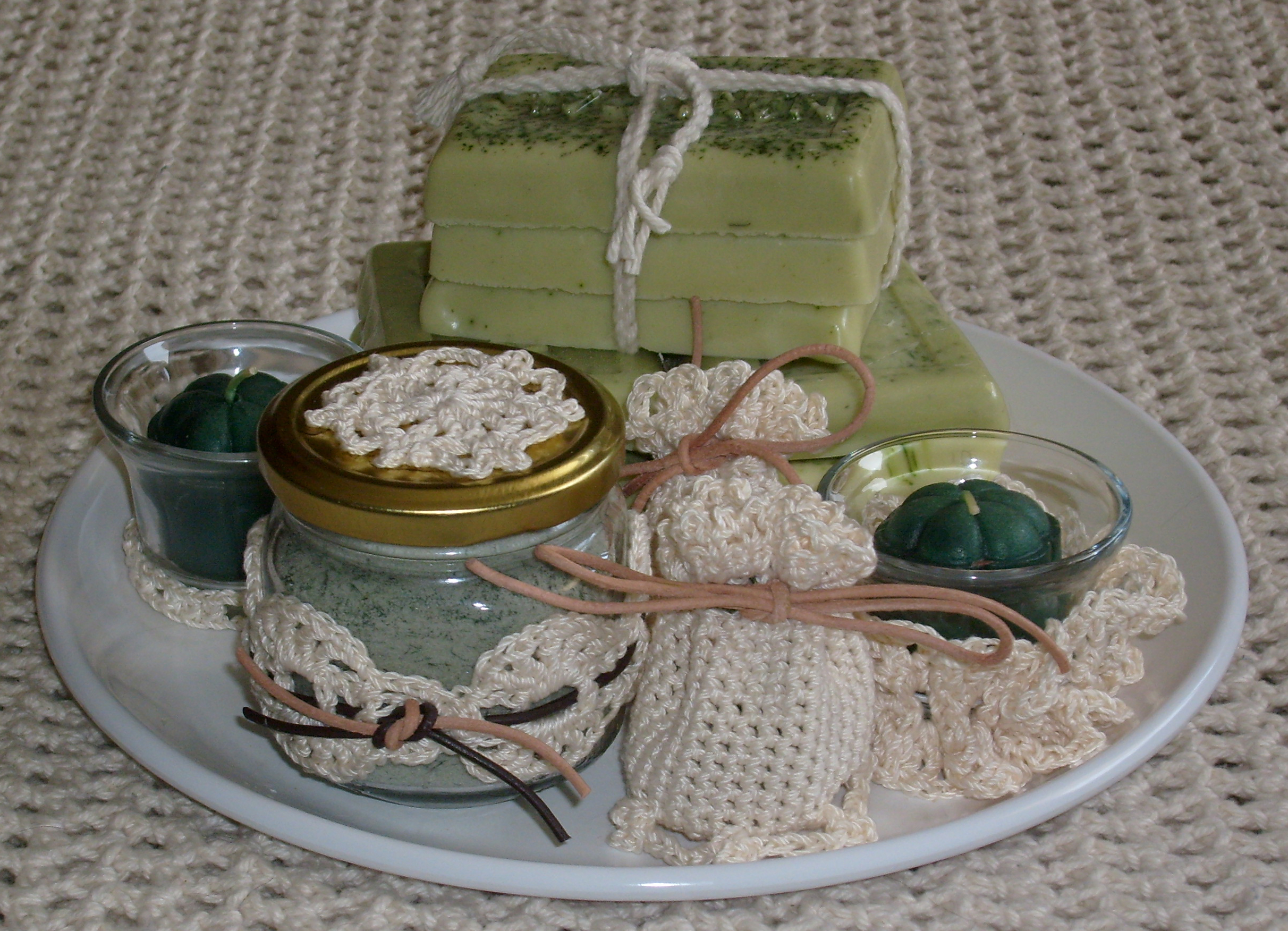
Make bath salts. Measure some coarse ground salt (epsom salts, sea salt, etc.) into a freezer bag, drip in a few drops of essential oil (and coloring if you want), seal it, shake it so it's all mixed up, then poor it in a pretty jar. (Or your bathtub.) When I clicked around the internet on this topic, I found that all the DIY bath salts were some variation on this (though some included baking soda). The really artsy people include rose petals or dried lavender buds, and they decorate their own jars.

Note: You can buy essential oils at a craft store or online, just look for soap making supplies. There's probably soap coloring that's better for you than food coloring, but food coloring is probably fine.

{two}

Image by A Girl With Tea
After you make tea, leave the tea bag in the sink and let the hot water from your tap splash on it as you wash dishes. A tea bag is good for about a cup and a half, and there's no sense in letting that half a cup go completely to waste. Let the aroma rise up to your nose while you're washing dishes. When you're done, toss it.

{three}

Image by James Vaughan
Powder your carpet, let it sit for ten minutes, then vacuum. "Powder?" you ask. Crack open a sachet packet that's done smelling good (it's still got a little life left; you just have to vacuum it to smell). Use scented baby powder, baking soda, or baking soda dripped with essential oils.

{four}

Image by André Karwath

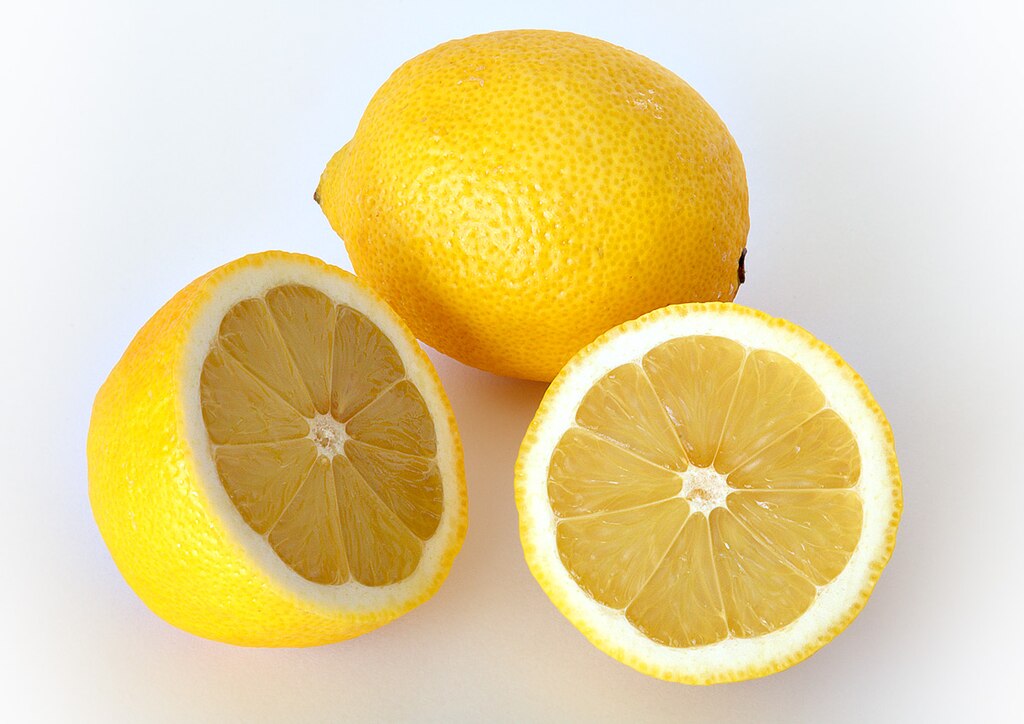
Put lemon or other citrus peels down your garbage disposal. My mom always told us not to do this when we were kids, so maybe this is actually bad for the disposal. I did it accidentally once, about four apartments ago, and it smelled really nice, so I kept doing it.

{five}

Image by nimble photography

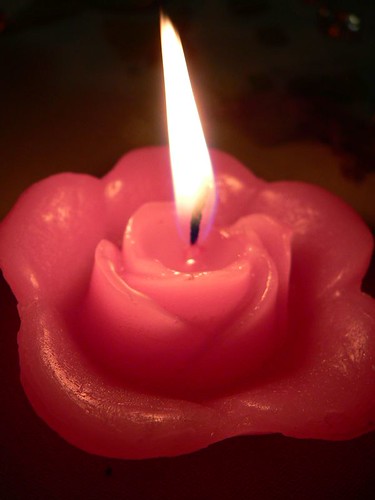
Make candles. Or if you're not into DIY, buy some. And light them.

{six}

Image by Kham Tran

Use your crockpot. The easiest crockpot recipe I know is this: cut up a chicken breast or stew beef, some onion, and some carrots and put them all in the crockpot in the morning. Add salt and pepper right before dinner time. Your house will smell like chicken soup or beef stew all day.

{seven}


Marry a man who smells like he looks amazing.


Wednesday, February 12, 2014

You can have a great marriage without any superpowers. (Right?)

by Mary C. Tillotson
Marriage is hard, everybody. Really hard.

Luke and I dated for a while, then he proposed and I said yes and we were engaged. We glowed for a few days, and then the bad news started coming in droves.

"Marriage is hard, you know," I heard. Over and over again.

This one retirement-aged lady from church: "Marriage is really hard. You know, my sister-in-law got married before we did, and she told us the first five years were the hardest. At the end of five years, I called her and said 'At least we're through the hard part!' And she said, 'No, the first 10 years are the hardest.' At the end of 10 years, I called her again and she told me the first 15 years are the hardest. You know, it's really all hard."

Let me describe that conversation in two words: Not encouraging. Or seven: Not what engaged people need to hear.

She was laughing in that way moms laugh about kids throwing up all over everything and ruining your life goals and your priceless, inherited-from-four-generations dishes. If you want to commiserate with people who have already experienced the same thing, go for it, but don't talk to me about it! You're just making me doubt whether this is really a good idea after all.

We turned out okay: for one thing, Luke is the sort of man you don't not marry when he asks, and for another, we had very supportive parents so we could mostly deflect these kinds of comments. But aside from our parents, we mostly heard two messages about marriage:

Monday, February 3, 2014

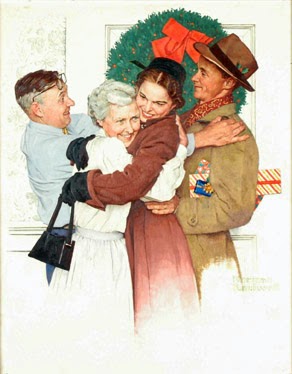
Twenty-First Century Homesickness

Home for Christmas | Norman Rockwell
By Mary C. Tillotson

Christmas was crazy at my parents’ house, and I missed all of it.

We drove past my hometown (southern Michigan) to visit Luke’s parents (northern Michigan) first, and for a while, the weather was pretty crummy for driving. In northern Michigan, everything just froze, so it snowed and it was gorgeous; in southern Michigan, it was just enough warmer to do a little thawing and refreezing, resulting in an equally gorgeous ice storm that knocked everybody’s power out.

So while Luke and I went ice-skating and wandering around the gorgeous lakefront downtown in crisp winter weather, my parents hosted a houseful of four of their adult children(-in-law), and two of their toddler grandchildren with no power – which meant no heat in the single-digit temperatures, no water except what was manually hauled from the basement sump pump to flush the toilet with (not drinkable). I wasn’t there to help. We live in a day’s drive away, so between work schedules and carpooling arrangements, our travel plans were set when they were set.

Friday, January 31, 2014

7QT: Staying Frugal with Food

By Mary C. Tillotson

I was trying to come up with some fun wordplay for the title but after getting stuck between "Frood" and "Food-gal," I decided that wasn't a good idea. Being frugal with food, whether from necessity or disciplined stewardship, is a good idea. Here are some things I've learned:

{one}

Cook real dinners. If you don't know how to cook, get a book (or the internet!) and learn. It takes practice and you might have some evenings where you spent a lot of time on something that you end up throwing away, but you'll get better at it and it's the cheapest way to eat. If you take what Luke and I spend on groceries for a month (which includes things like shampoo and batteries, so this is really an overestimate), we eat (both of us) on just over $10 a day. That's the cost of, what, three Big Macs, sans fries? Fast food is cheap, but cooking is cheaper. (For more on this, read this helpful essay Cooking isn't fun, but you should do it anyway.)

{two}

Eat your leftovers. Any food that goes bad before you get around to eating it is money wasted. If you have enough leftovers for dinner, have leftovers for dinner. If you don't, have leftovers for lunch -- it'll make your bread and sandwich meat stretch a little longer. Tip: As you're eating your leftovers, note which foods taste good left over. I think pasta tastes better leftover, but mashed potatoes are no good the next day, for example. Adjust your cooking and eating habits with your preferences in mind.

{three}

On that note, plan your cooking around what you have lying around in the fridge (even if you have to buy more groceries to make the dish work). It's hard to buy the exact amount of ingredients for each recipe, so after you've cooked something, see what miscellany you have left. Do you have half a green pepper left over after the Spanish chicken skillet? Make something that involves green pepper -- put ham on your grocery list and make my mom's Impossible Pie. Does that leave you with extra ham, but no more green pepper? Maybe do some kind of ham and potato dish. And so on. We've found this is one of the best ways to keep food from going bad.

{four}

Be wary of scrimping on your grocery budget. Store-brand foods are cheaper, but might not be any better for your budget. We buy most things generic, but I finally realized I just didn't like the store-brand ham. I would put it on a sandwich, choke it down, then not put it on another sandwich until it went bad -- and then I'd throw it out, wasting the money we'd spent on it. Finally I realized it was actually cheaper to buy more expensive ham. I'd actually eat it. Stock your kitchen so you aren't tempted to say "Blah, there's nothing good here... let's go out." (See #7.)

{five}

Buy meat in bulk, near the expiration date, and freeze. We buy a package of somewhere between a half and a whole dozen chicken breasts, then wrap them individually in plastic wrap, put them all in a large freezer bag, and stick the whole thing in the freezer. (I learned in college that even with my handsome and very strong then-boyfriend's help, it's almost impossible to separate frozen chicken breasts without thawing them all, and I hear you're not supposed to re-freeze meat unless you cook it. So separate them before you freeze them, but they don't need individual freezer bags.) If you freeze the meat right away, the expiration date doesn't really matter, and meat is usually super cheap the day or two before it "expires." You can do this with any kind of meat and some other foods -- just break it down into meal-sized portions, put it in a freezer bag, and freeze.

{six}

Buy spices in bulk at a health food store. At health food stores, "bulk" doesn't mean enormous amounts; it means they buy enormous amounts and scoop out just the amount you want into a little plastic baggie. It usually costs something like $100 a pound but think about how much dried basil -- which sticks to things with static -- it would take to make a pound. (Probably several garbage cans full.) I usually spend about a dollar to fill up our little jar twice. (Fair point, spices don't cost that much to begin with. But they're important: they're what make your food not taste all the same. Plus, health food store spices are probably organic and better-tasting than the store-brand you're tempted to buy.)

{seven}

Avoid dinners out (and when you do go, order off the lunch menu). For dates or hanging out with friends, go out for coffee, ice cream, or dessert. I heard someone on the radio suggesting feeding the kids frozen chicken nuggets at 6, then sending them to their bedrooms to be quiet afterward -- then, cooking a nice, elaborate, grown-up meal (where the meat and vegetables actually touch, the radio woman said). Hosting friends for a pizza and game night is cheaper than going out -- and a nicer frozen pizza tastes just as good (and is more convenient, and cheaper) than delivery.

That's all for today! What ideas and tips do you have?

Join Jen with us!

Image by Tax Credits.

Wednesday, January 29, 2014

Anonymous Us: Some Thoughts on Third-Party Reproduction


By Mary C. Tillotson
Photo via Wikimedia

Some things don’t get talked about very often – maybe because they’re too complex for our world of sound bites and pigeon-holing, maybe because they’re uncomfortable topics. Alana Newman knew this and founded Anonymous Us for this reason: to talk about what it’s like to be conceived by a third-party donor.

Anonymous Us is a website for donor-conceived children, sperm and egg donors, surrogates, fertility-industry professionals, and others whose lives have been affected by the fertility industry to share their stories anonymously. Founded in January 2011, the site boasts almost 200 stories that run the gamut of emotions.

“The reason I started my site is people are just too ashamed to come forward,” she said.

Alana and I chatted on the phone about a month ago, and it’s taken about that long for my life to calm down enough so I could write anything about our conversation. As you’ll see from her website, not every story is like hers, but many are.

I was especially interested in Alana’s thoughts on two issues: on a personal level, the complicated emotions involved in third-party reproduction, and on a societal level, the family breakdown that third-party reproduction contributes to. She has experience and knowledge in areas I don’t, so I’ll let her take it from here.

Wednesday, January 15, 2014

Budgeting Away the Tightwad

Opened this today. Are you serious, Dove?
By Mary C. Tillotson

The perfect combination of having money saved up and no imminent moving plans fell into place, and my husband and I decided to replace the four-inch piece of foam (taken from a hide-a-bed couch his brother was throwing away) we'd been sleeping on for a year and a half with a real mattress.

It was like graduation or marriage or buying a house -- one of those things that makes you officially an adult, and for real this time. We went to the mattress store and found that the most comfortable one was, happily, toward the low end of our price range. We paid for it and felt very proud of ourselves. On Friday, we brought it home.

I haven't slept well since. Last night, for example, I spent the hours until sometime after 2 a.m. designing (in my head because screens only promote insomnia) a powerpoint that would explain everything a reporter would need to know about education reform. Not because I needed to, but because I like sharing what I know and haven't used powerpoint in ages. And I was bored.

This is why I hate spending money. Because sometimes, through no fault of your own but through what definitely feels like your fault, you end up working lots of hours to pay for expensive things that are actually kind of a waste.

Friday, December 20, 2013

Is the 'War on Women' Rhetoric Demeaning to Women?

By Mary C. Tillotson

As I’ve written before, I really can’t stand the “women’s issues” and “war on women” rhetoric in American politics. So when I saw Make Love, Not War (On Women) by Brenda Zurita at Concerned Women for America, I thought: I need to talk to her.

So I did.

When we think of “women’s issues,” we usually mean abortion, contraception, sex, etc. But regardless of what you think on those issues, the “war on women” rhetoric is degrading.

Here’s Brenda:
There are polls out showing that the majority of women are pro-life, so the mainstream media just perpetuates this myth that all women think exactly alike. It’s insulting. They don’t group men that way. I don’t know if you’ve seen those bro-choice commercials – they’re ridiculous, but do we think all men are like that? No, I don’t, and the media doesn’t portray all men as being like that, and yet we’re all supposed to say, “Well, if Planned Parenthood thinks it’s a good idea, of course I support that.” 
The power is if you repeat it enough, people will believe it and not really research what it means.

I think it’s offensive that people wouldn’t understand that women are different – we don’t all hold the same positions – or the fact that because I’m a woman, I’m going to believe these things means you don’t think I’m up to researching an issue and deciding for myself. That’s why Concerned Women for America was started. We got fed up with hearing feminists on TV defending their position and saying this is how all women think, and wait a second, there’s a whole contingent of women that don’t think that way.

How often do you see the president and CEO of Concerned Women for America on TV? You see Nancy Pelosi and Planned Parenthood representatives constantly, but there’s a conservative voice out there.
Whatever individual women think about abortion and contraception, those often are not their top issues when voting, she told me. When Americans lose their jobs or safety or financial security because of a bad policy decision, many of those Americans affected are women.
I don’t think “women’s issues” are as important to women as economic issues and national security issues, but every time a Democrat wins, it seems like they say, ‘Oh, war on women, women agree with us on freedom of choice issues,’ but women, most women take care of household finances and they have to balance the budget and they understand those things. The government today is running willy-nilly. If only we could all live like that: we don’t have the money, we’ll just spend anyway!
Frustrating, right? Rather than wallow in how horrible it all is (which is what I’d really like to do), Brenda offered a suggestion for bucking the bandwagon. (I know. Fixing the problem. Totally men’s work.)

Contact your local representatives and senators and tell them what you think about the issues that matter to you. I found this piece really helpful – it’s written by a former congressman about how to get your message to your congressman most effectively. If you don’t remember everyone’s names, try this -- you just plug in your zip code, and your national and state officials pop up.

Because, look. The "War on Women" isn't a war and it isn't against women, any more than any other policy idea is against women. It's against the liberal, pro-abortion agenda pushed by some men and some women but not all men and not all women.

If women are going to be in politics -- whether it's voting, writing, or running for office -- it's only fair to be fair and remember that we have just as much right to disagree with each other as men do. One more word from Brenda:
[The media] denigrate conservative women. Look how they attacked Sarah Palin. The attacks against her were so file. If they'd been perpetuated against Nancy Pelosi or Michelle Obama or any Democrat leading lady, they never would have tolerated that.


Brenda Zurita is a research fellow for the Beverly LaHaye Institute, at Concerned Women for America. To get involved with CWFA, visit cwfa.org.

Tuesday, December 10, 2013

Not Washing Dishes: A Tribute to My Mom

By Mary C. Tillotson
Image by Sarah Korf

Once upon a time, when I was a child, my mom made impossible pie for dinner. One of my siblings asked why the quiche-like food was called "impossible pie." (We were too young at the time to have "quiche" in our vocabulary, and that may have been the reason.)

"Because it's impossible to make anything better!" my brother piped up.

"Or because it's impossible to make anything worse," I grumbled.

My poor mother. Despite my picky eating and just plain not eating, I learned a lot of important life lessons from her, many of them regarding food. For example, whenever my dad cooked, she'd say, "Marry a man who's as nice to you as your dad is to me." (I did.) I also learned things like "Don't eat soap" (I don't), and, most importantly, "Don't wash more dishes than you have to."

My mom is a master at this last one, as you'll notice from her comment on my chili recipe a few months ago. She's amazing. This isn't something every woman gets to learn from her mother, so I thought I'd share her secret here and show you exactly how it's done. (She'll probably leave a comment that will eliminate one more dish. Just watch.)

Some general tips: Cutting boards double as plates when you're just having a snack -- especially if it's cheese and crackers or a sliced apple. Meat can be cooked in a saucepan before adding spaghetti sauce. And the only reason not to mix measured ingredients right in the measuring cup is to support the mixing bowl industry.

For the real demonstration, I'll make impossible pie (which I like now -- it's funny what adulthood does to you), after which I'll only have to wash the following:


one cutting board
one knife
one one-cup measuring cup
one four-cup measuring cup
one fork
one 8x8 pan

Here's the recipe:

Tuesday, December 3, 2013

Redeeming "Women's Studies"

By Mary C. Tillotson

A couple weekends ago, my husband and I saw the local college's performance of The Three Musketeers. The actors and set designers and costume-makers and everyone did a fine job, especially considering the limited resources, but I was disappointed with the play itself. The playwright had added a character: D'Artangan's little sister Sabine, who I think was supposed to represent a "women can be strong, too" theme, but was really an enthusiastic but annoying tag-along little sister who mostly got in the way. The three inseparables and D'Artangan are constantly irritated with her, and the play ends with her running off with them to battle some kind of evil, but she doesn't even have a sword. It cheapened the whole job of the musketeers.

At the beginning of the play, D'Artangan sets off for Paris, hoping to become a musketeer, and their father sends Sabine with him -- she's off to Paris to study. As soon as their father is out of sight, she rips off her skirt to reveal pants, then announces her intention to skip school and do something more exciting (I can't remember what) in Paris. Throughout the play she makes comments like "Life isn't very fun for a woman in 17th century France."

It was jarring, and I wanted to protest, but I don't know much about women in 17th century France. In fact, I don't know much about women in most of history. I hear two conflicting narratives: (1) that women were oppressed by men until the 20th century when we finally started breaking free of the patriarchy (from suffrage to birth control), and (2) that the oppression of women is an overblown historical myth, and things weren't near as bad as modern feminist pretend. I have sympathies with both understandings of history.

Saturday, November 23, 2013

Denim Adventures, or, A Flowchart for Pants Shopping

By Mary C. Tillotson

you've served me well, old friend
I needed some down-time on Saturday, and I must have really needed it because I had this crazy idea that during my "down-time" I could run out to a store and buy a pair of jeans "real quick."

I would be less stressed because I'd have one thing off my to-do list, I reasoned. I do need jeans, after all.

My favorite pair (from my sister-in-law; they didn't fit her) is growing holes in the knees and I don't think they can hold out much longer. My second-favorite pair I purchased for cheap at a thrift store, and like other Aeropostale jeans I've gotten at thrift stores, they fit great for the first month, then start digging into my belly while exposing my backside. Not quite the look I'm going for.

Also, they are Aeropostale jeans. I'm done with my early 20s and would like to find a different brand that fits, thank you, and hopefully for longer than a month.

Noble goal in mind, I set off for a department store, envisioning myself enjoying a cup of tea near the fireplace, wearing my new jeans. Yes! This was an intelligent way to spend my allotted "relax" time.

Thursday, November 14, 2013

In Defense of Emotions

By Mary C. Tillotson

Image by Alin Klim
When I was a sophomore in college, I dated a guy, and it wasn't a great relationship. I spent a huge amount of energy struggling with an intense desire to not be dating him alongside an inability to find a good reason why I shouldn't. "I don't want to" is selfish and therefore not a good enough reason (I reasoned) because that was based on emotion.

I spent the beginning of my senior year sighing to a friend that I was having the hardest time in the world getting over this other very attractive man. He was smart, mature, from Michigan, good with kids, and surrounded by plenty of other like-minded women at a college 500 miles away from me, and would graduate two years after I did.

When he asked me out later that fall, I was more relieved than anything else. Oh good. Now I don't have to get over you. We've been married for a little more than a year, and marrying him is one of the best decisions I've ever made.

In both cases, my emotions were right on (hindsight, and some friends I didn't listen to, told me the first guy had a lot more growing up to do), and my reason was off track. I've done some maturing since then, and I've come to realize that my strong hunches are generally on target. It sort of bothers me: like most people, I want to think I make rational decisions instead of emotional decisions. But, at least with me, my emotions are usually wiser.

Let's go back to college for a minute. I remember hearing some people say that women shouldn't learn Greek, or shouldn't earn Ph.Ds, or that women were generally less rational than men. All of this bothered me to the core, and I think much of it came out of the overeager liberal arts college student's zeal to save the world via Aristotle.

I think it's stupid to say women shouldn't learn Greek or earn Ph.Ds; if you're a woman and you want to, go for it. It's wrong to think of women as crazy, hormone-ridden creatures that can't be trusted with anything important or meaningful. It's inaccurate and insulting to think of women as a little less intelligent than men, or not quite up to speed.

But I'm haunted by the fact that my hunches are a better decision-making guide than my reason. It's not just relationships -- it's basically any big decision.